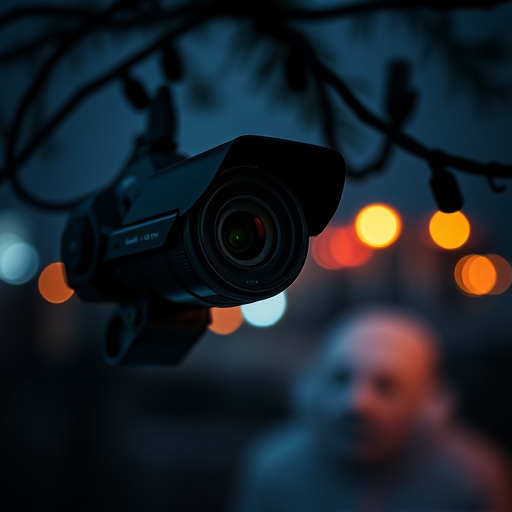
Mini spy cameras with nighttime recording capabilities utilize infrared illuminators to capture detailed footage in low-light conditions. Their discreet nature makes them ideal for security systems, pet monitoring, and covert investigations. The Science Behind Light Reflection Technique detects these hidden devices by analyzing reflection patterns of natural light during nighttime recordings. This non-invasive method, involving strategic lighting and specialized equipment, is valuable for professionals and privacy advocates. With the increasing prevalence of mini spy cameras, advanced detection technologies are emerging, integrating sensors, machine learning, and portable tools to enhance privacy and security in various settings.
Uncover the subtle secrets hidden within plain sight with our guide to spy camera detection. In an era where privacy is paramount, understanding the art of identifying miniature surveillance devices becomes essential. This article explores the innovative science behind light reflection techniques, empowering you to detect mini spy cameras during nighttime recordings. From domestic security to industrial espionage, discover practical applications and stay ahead of evolving technology with our comprehensive insights into spy camera detection.
- Understanding Mini Spy Cameras and Nighttime Recording
- The Science Behind Light Reflection Technique
- Detecting Hidden Cameras Using Reflected Light
- Practical Applications of Spy Camera Detection
- Future Trends in Spy Camera Detection Technology
Understanding Mini Spy Cameras and Nighttime Recording
Mini spy cameras, as the name suggests, are compact and discreet devices designed to capture footage without drawing attention. These tiny cameras often operate on battery power and can record video and take photos, sometimes even in HD quality. They are commonly used for surveillance purposes, making them a popular choice for home security systems, pet monitoring, or covert investigations. One of their most remarkable capabilities is nighttime recording, thanks to built-in infrared (IR) illuminators.
Nighttime recording is a significant feature of mini spy cameras as it allows continuous monitoring in low-light conditions. The IR LEDs emit light in the infrared spectrum, which is invisible to the human eye but can be detected by the camera’s sensor. This ensures clear and detailed footage even when ambient light is minimal, making these cameras an effective tool for round-the-clock surveillance without compromising on visibility.
The Science Behind Light Reflection Technique
The Science Behind Light Reflection Technique involves utilizing the natural properties of light to detect and expose hidden mini spy cameras, especially during nighttime recordings. When light encounters a smooth surface, it reflects in a predictable manner, creating a pattern that can be analyzed. By strategically placing light sources and employing specialized equipment, this technique capitalizes on the reflection patterns to identify and locate miniature spy cameras.
The process leverages the fact that mini spy cameras, despite their small size, emit or manipulate light signals for image capture and transmission. When a beam of light hits these devices, it interacts with their optics and circuitry, resulting in altered reflections. Skilled practitioners can interpret these changes, pinpointing the exact position of the hidden camera. This non-invasive method is particularly valuable for security professionals and privacy advocates who seek to uncover covert surveillance devices without causing damage or raising suspicion.
Detecting Hidden Cameras Using Reflected Light
Detecting hidden cameras using reflected light is a technique that has gained significant attention, especially with the rise of mini spy cameras designed for nighttime recording. This method leverages the principles of optics and light behavior to uncover covert surveillance devices. By projecting a known pattern or light source onto potential hiding spots, experts can analyze the reflection and scattering of light off these surfaces. Any modification in the reflected light’s intensity or pattern could indicate the presence of a spy camera, as it suggests something is obstructing or manipulating the light beam.
This technique is particularly useful in high-security areas where mini spy cameras might be hidden discreetly. The challenge lies in the complexity of analyzing these reflections accurately, which often requires specialized equipment and expertise. However, with advancements in technology, portable devices capable of performing this task are becoming more accessible, enabling individuals to take proactive measures against privacy invasion by undetected night-time recording devices.
Practical Applications of Spy Camera Detection
The practical applications of spy camera detection are vast, especially with the proliferation of mini spy cameras capable of nighttime recording. This technology is becoming increasingly important for both personal and professional security. Individuals can use it to safeguard their homes and families from covert surveillance, ensuring privacy in their living spaces. For businesses, particularly those dealing with sensitive information, detecting hidden cameras can help protect trade secrets and prevent industrial espionage.
In the event of legal proceedings, evidence obtained through spy camera detection can be crucial. It aids in uncovering illegal activities, such as corporate espionage or stalking, providing tangible proof for court cases. This technique is also valuable for law enforcement agencies, enabling them to investigate and prevent crimes that rely on hidden surveillance, thereby enhancing public safety.
Future Trends in Spy Camera Detection Technology
With advancements in technology, the future of spy camera detection looks promising and multifaceted. One emerging trend is the integration of advanced sensors and machine learning algorithms to enhance the accuracy and efficiency of detecting miniature spy cameras, particularly those used for nighttime recordings. These systems can analyze light reflections, shadows, and patterns to identify suspicious devices, making them invaluable in high-security areas.
Additionally, the development of portable and user-friendly detection tools is gaining traction. These innovative solutions enable individuals and professionals alike to swiftly scan environments for hidden cameras, ensuring privacy and security in personal and professional settings. As mini spy cameras become more compact and versatile, so too will the methods to counter them, promising a safer and more transparent digital landscape.
The detection of mini spy cameras, particularly during nighttime recordings, has evolved significantly through advanced light reflection techniques. By understanding how these tiny devices operate and utilizing reflected light patterns, it’s now possible to uncover hidden surveillance equipment in various settings. This technology plays a crucial role in maintaining privacy and security, with practical applications spanning from personal safety to industrial and government operations. As we look ahead, future trends promise even more sophisticated spy camera detection methods, ensuring that our interactions and spaces remain free from unwanted eyes.